
In Memory of My Dad
On March 9, 2024 I wrote the following in a Facebook post:
Yesterday I was by my dad’s side, holding space and holding his hand as his body shut down. This morning, at around 2am, he took his final breath and left the body that had become increasingly painful in recent months.
Today is the 2nd anniversary of Dad’s passing, and I thought I’d give his story a different platform.
Dad lived a good, long life. He was 87. His partnership with the love of his life, Peter, lasted 50 years. He left a legacy that most people only dream of. He was loved by many. What more can you ask for.
Jerry Howard Styner was born in Los Angeles in 1936. Music came first — he was playing and recording before most of his peers had figured out what they wanted to do with their lives. He earned a scholarship to USC as a paperboy for the LA Times. Down the road he earned a master’s degree in electrical engineering from USC and spent time in the early 1960s working for government contractors. But the corporate world wasn’t where he belonged, and he knew it. He returned to music, and music gave him back far more than a career.
Before he was Jerry Styner the composer and producer, he was Rusty Howard, fronting a group called the Rhythm Rangers and playing western swing at USC parties. Those early country and rockabilly recordings — cheap drugstore versions of songs pressed on 78s and 45s in California in the mid-1950s — were the first chapter of what would become a remarkably long story. Here’s a fun one on YouTube
The chapter that most people know began in 1963, when Dad teamed up with lyricist Guy Hemric to write songs for Beach Party, the first of American International Pictures’ wildly popular beach film series. Together, Hemric and Styner wrote songs for all seven films in the franchise. Songs like “It Only Hurts When I Cry,” performed by Donna Loren in Beach Blanket Bingo, became part of the breezy, sun-soaked soundtrack of a cultural moment.
In 1968, Dad received a Golden Globe nomination for Best Original Song for “Please Don’t Gamble with Love” from Ski Party. He scored more than 30 feature films over the course of his career — everything from teen beach musicals to crime dramas to action pictures — with titles including Bikini Beach, Thunder Alley, The Savage Seven, Tick…Tick…Tick, and Mitchell.
His work in the studio was just as wide-ranging. Dad worked with artists including Stevie Wonder, The Supremes, The Osmonds, Ricky Nelson, Eddy Arnold, Solomon Burke, and Chet Baker. He worked in Hollywood, New York, and Nashville, accumulating a BMI catalog of over 300 published and recorded songs. Some of his compositions found new audiences decades later, appearing in the soundtracks of Good Morning, Vietnam (1987) and Whip It (2009). He spent countless hours in the studio with the musicians who would later become known at the Wrecking Crew.
In the mid-1970s, Dad pivoted again — this time into the world of medical billing software, an industry that barely existed yet. He built a company from the ground up in an era before personal computers were commonplace. That’s the thing about Dad: he wasn’t content to do one thing. Engineering, music, software — he moved through worlds that most people would consider entirely separate.
In the early 2000s, he found his spiritual side and became a minister with the Palm Desert Center for Spiritual Living. And around the same time, he did something quietly courageous: he released One for the Boys, an album of original songs that he sang, arranged, played, and produced himself. The album was a personal coming-out — each song tracing a stage of his emotional and spiritual growth as a gay man. He wrote in the liner notes that a few friends questioned the wisdom of it, that he could have changed a pronoun here and there and sidestepped the whole thing. He didn’t.
His partnership with Peter lasted half a century. Fifty years is a long time to love someone, and by any measure, they built a real life together.
Dad was so male-identified that he wasn’t quite sure what to do with a daughter. I found my way to him as a child through baseball. Dad was a lifelong Dodger fan, and we went to countless Dodger games when my brother and I were kids.
In 2016 Dad came to live with me in Guatemala for the last eight years of his life. I became his caregiver, and in some ways those years gave us a closeness we’d spent decades working toward. He became a fixture in Panajachel, sang in our local choral group, and often came to hear Mark and me perform at our restaurant gigs.
In early 2020, just before the pandemic, Dad wondered out loud what Frankie Avalon (from the Beach Party days) was up to. I sent a message through Frankie’s website, and Frankie called me back. We arranged a call with Dad. Frankie was gracious and warm — he told Dad that when he does shows audiences still sing along to Beach Blanket Bingo. It was never a hit, he said, but people remember it. That’s one of Dad’s legacies: songs that burrowed in quietly and never left.
Watching someone age, being present for the slow and difficult passages, changes you both. I am grateful to my husband, Mark, for being there for both of us throughout.
Dad was a musician who became an engineer who became a software entrepreneur who became a minister who was always openly and fully himself. He played western swing at college parties and scored Hollywood films and produced soul artists and wrote love songs. He took his kids to Dodger games. He lived 87 years, and he filled them.
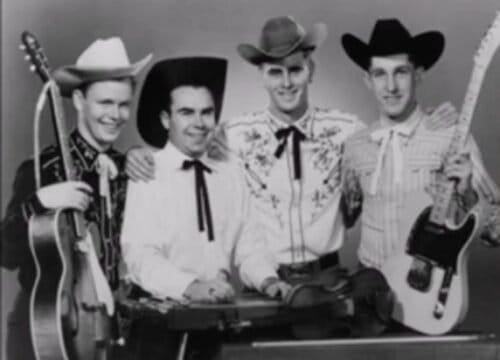 Rusty Howard and the Rhythm Rangers – that’s Dad on the left
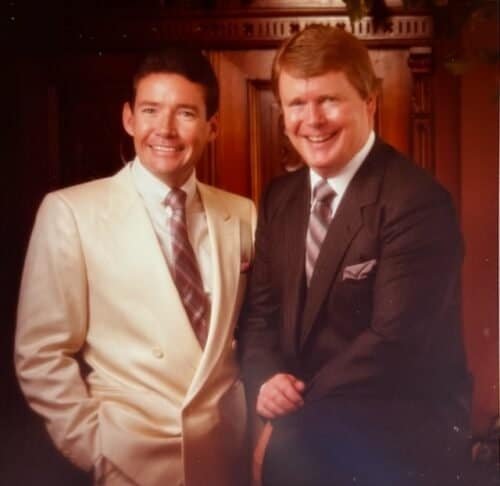 Dad and Peter in 1983.
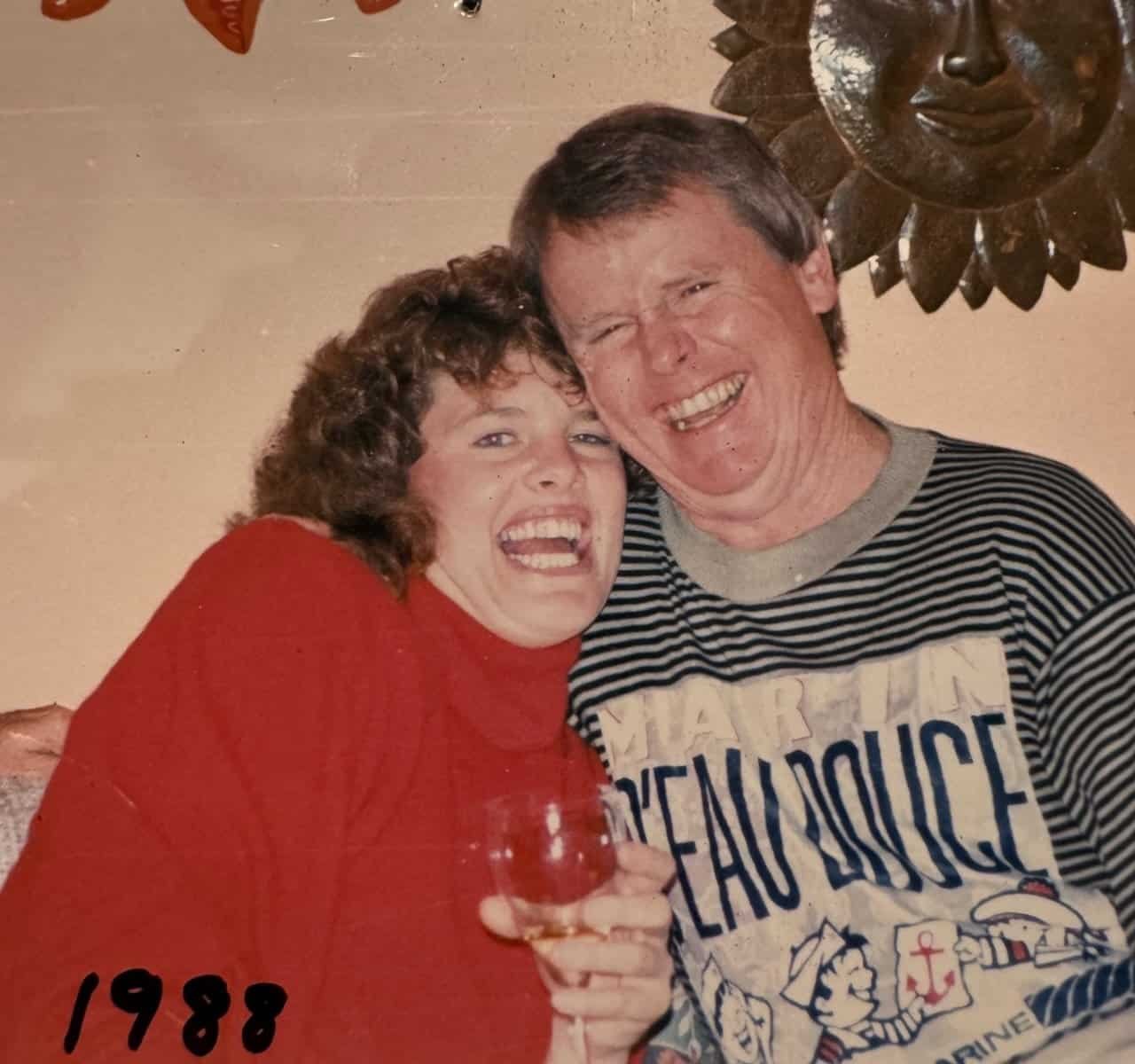
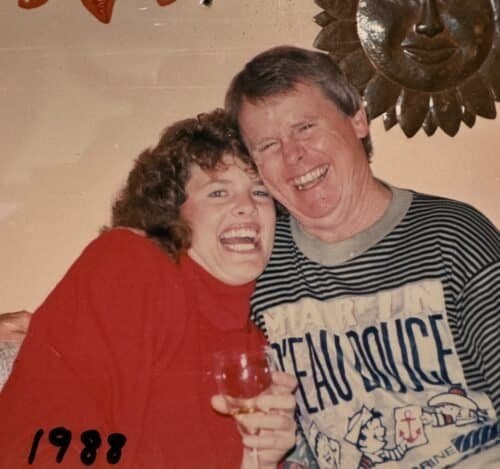 Dad and me at Christmas – 1988
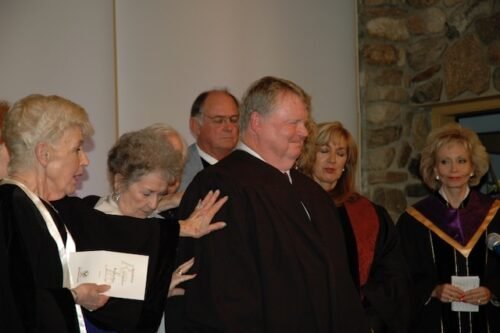 Dad’s ministerial ordination in 2007
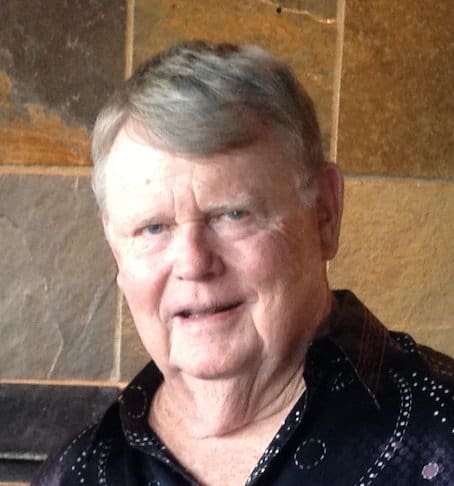 Dad on his 76th birthday (2012)
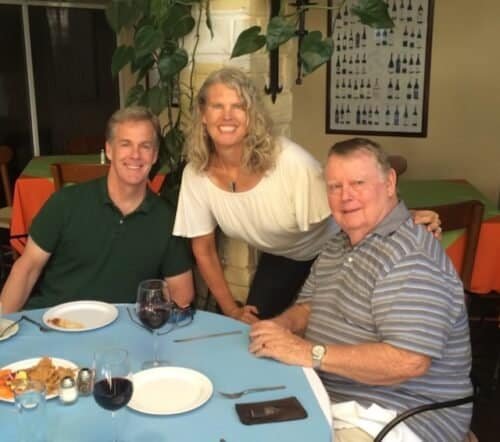 Dad with my brother and me after Peter died in December 2015, in Ajijic, Mexico
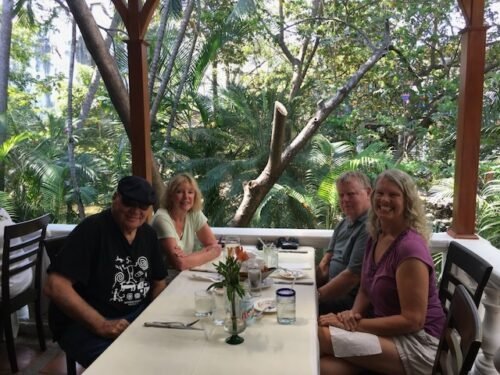 On a cruise through the Panama canal with Porter and Linda, shortly before Dad’s 80th birthday
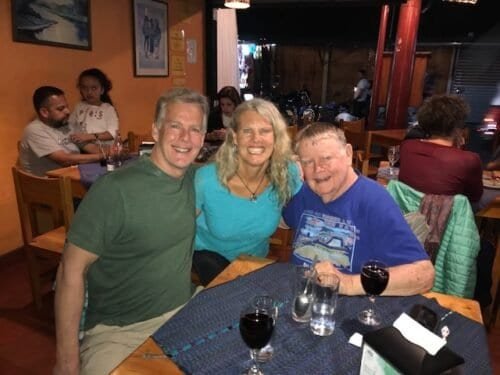 Dad with my brother and me in Guatemala
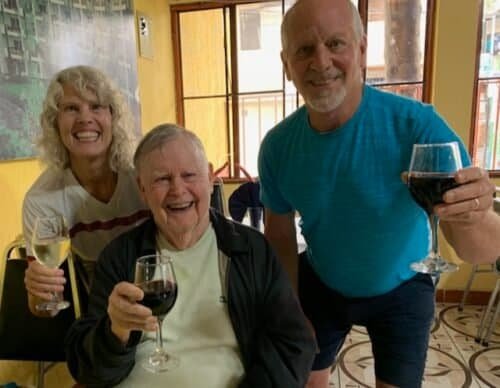 Dad with Mark and me in Guatemala
Share this post!




Thank you, Tracy.
It was an honor spending time with Jerry and getting to know him. He was always kind and gracious. Humble despite his awesome achievements.
Jerry comes into my mind now and then … I find myself smiling. Thank you, Jerry.
Thank you, Ling. Dad so appreciated your friendship and the time you spent together.
Thank you, Tracy, for this reminder of what a truly remarkable man Jerry was. I loved him.
Thank you for your comment, Gloria. You and Chris were an important part of his life.